


School Tour | Rahmi Koç Museum
Tour Program
School Trip | Rahmi M. Koç Museum
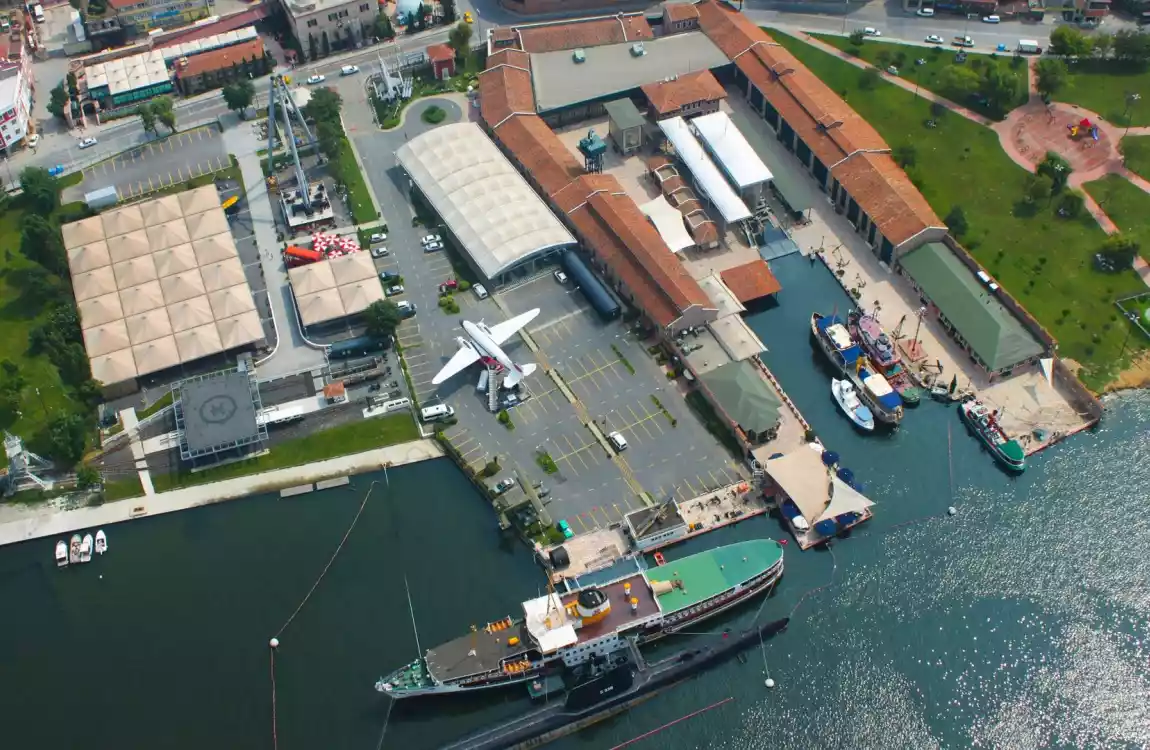
The Rahmi Koç Museum, which opened to visitors in 1994, is located in the Hasköy neighborhood on the northern shore of the Golden Horn. Today, the museum extends over an area of approximately 27,000 square meters and consists of three main sections.
Open-Air Exhibition Area
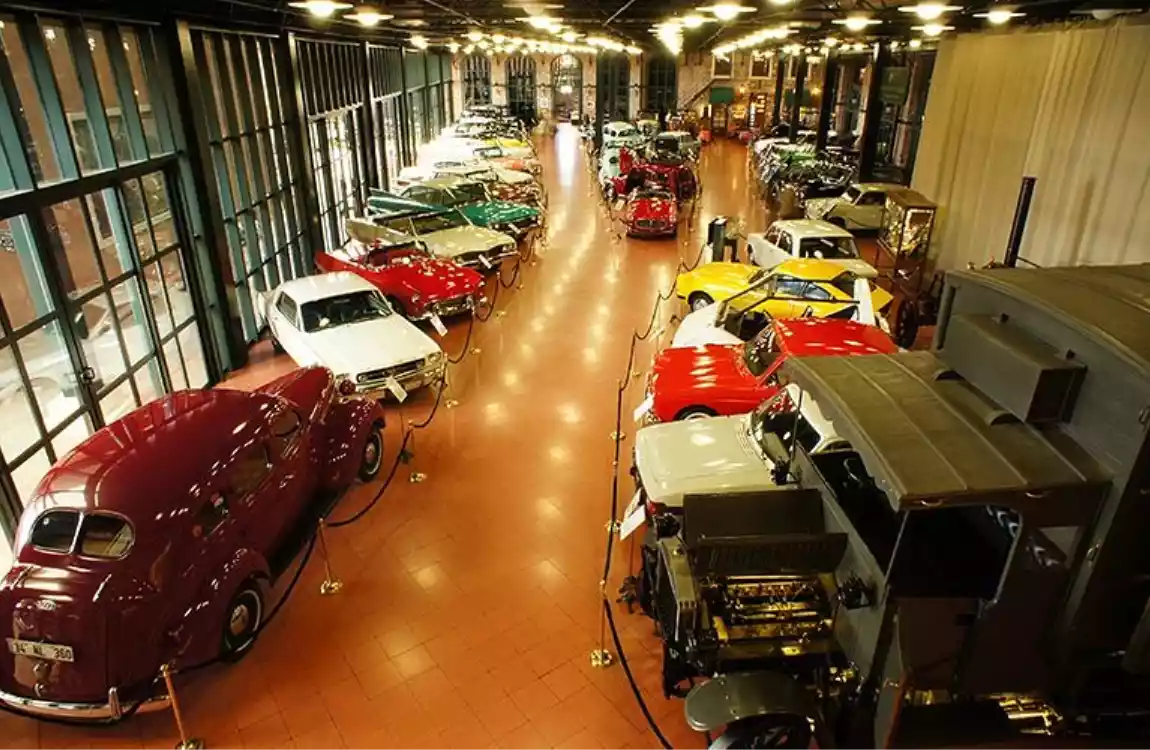
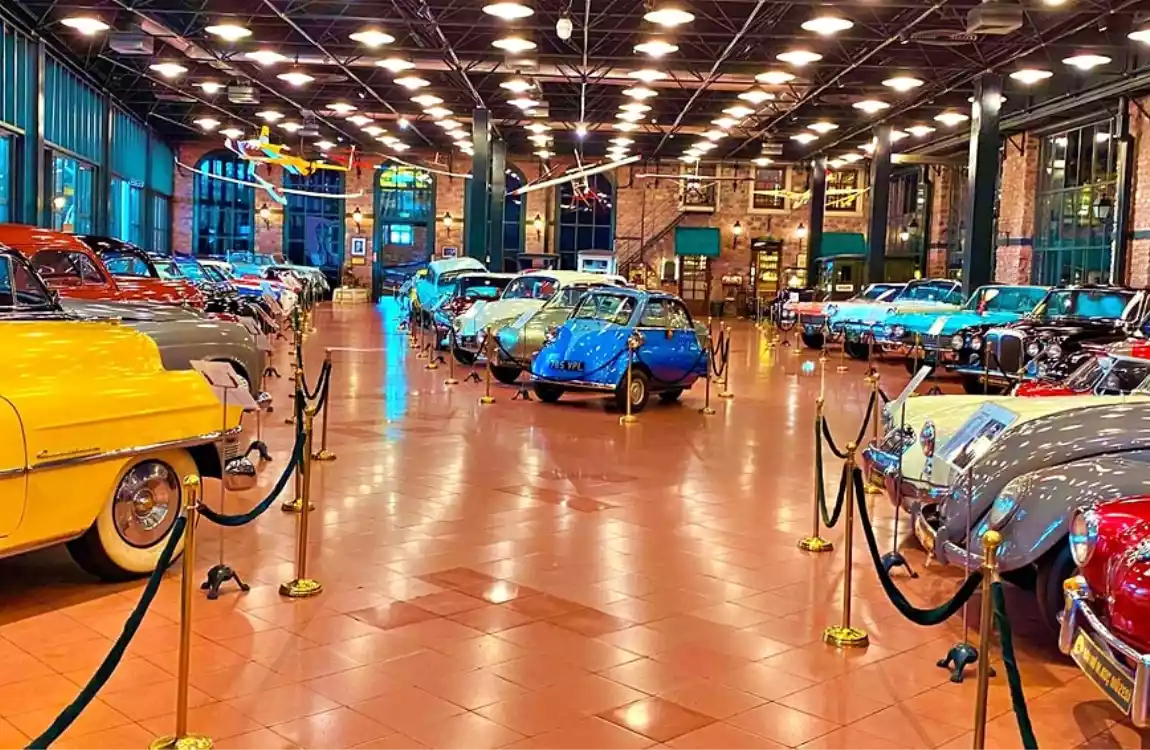
A part of the Rahmi M. Koç Museum collection is also presented to visitors in the open area extending from the main entrance on Hasköy Avenue to the Golden Horn. Classic automobiles, the massive Turgut Alp Crane, the I&E Greenwald Steam Engine, the B-24 Liberator and other aircraft, the Fenerbahçe Ferry and the TCG Uluçalireis Submarine moored in the Golden Horn are the items featured in this section of the collection.
Historic Hasköy Shipyard
Shortly afterward, since the exhibition spaces were no longer sufficient for the Rahmi M. Koç Museum collection, the dilapidated Hasköy Shipyard, located right opposite the lengerhane, was purchased and the restoration of this section was completed in 2001. The shipyard, which is of great importance for industrial archaeology at least as much as the lengerhane, covers an area of 11,000 square meters. The 14 buildings surrounding the land on three sides in a large U shape have been restored faithfully to their original form.
Hasköy Shipyard was established in 1861 by Şirket-i Hayriye for the maintenance and repair of its own ships. Initially consisting of several buildings arranged as workshops, the shipyard was gradually expanded as opportunities allowed. First, a 45-meter wooden slipway was installed at the shipyard, and its pulling power was provided by a steam-powered capstan. While this capstan was converted to electric operation in 1910, the city line ferries Kocataş and Sarıyer, bearing chimney numbers 75 and 76, were built here in 1938. In the following years, Hasköy Shipyard frequently changed hands until the 1980s, in line with changes in the organization of maritime transport.
When these structures, shedding light on an era, were purchased by the Rahmi M. Koç Museology Foundation in November 1996, they were abandoned. After the restoration of Hasköy Shipyard, carried out under the chairmanship of Dr. Bülent Bulgurlu, museum functions were assigned according to the area and height of the buildings.
Mustafa V. Koç Building
In the Ottoman Empire, the chain dropped into the sea to secure a ship and the anchor at its end was called a lenger, and the place where these were made was called the Lengerhane. The history of this Ottoman Lengerhane, built on the foundations of a building constructed for other purposes during the Byzantine period, dates back to the reign of Sultan Ahmed III.
The museum’s special history began in 1991 with the purchase of the historic Lengerhane building by the Rahmi M. Koç Museology Foundation. Following meticulous restoration work carried out by the foundation under the coordination of Dr. Bülent Bulgurlu, the museum was opened to visitors in December 1994.
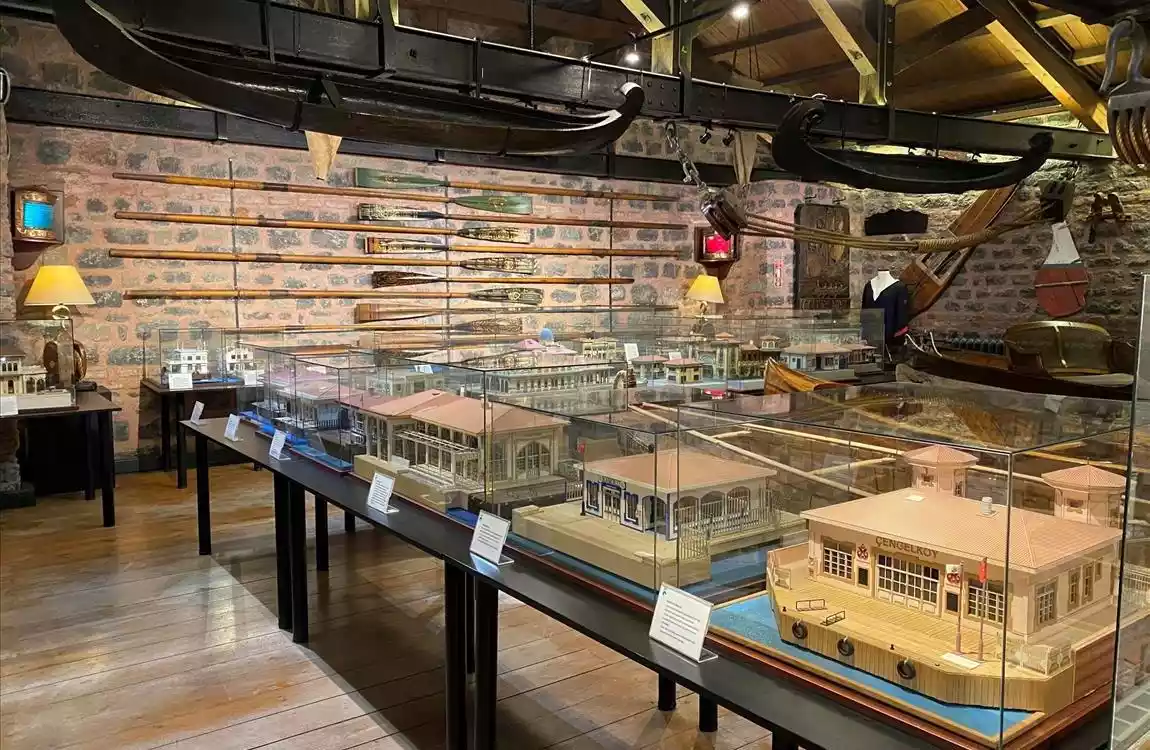
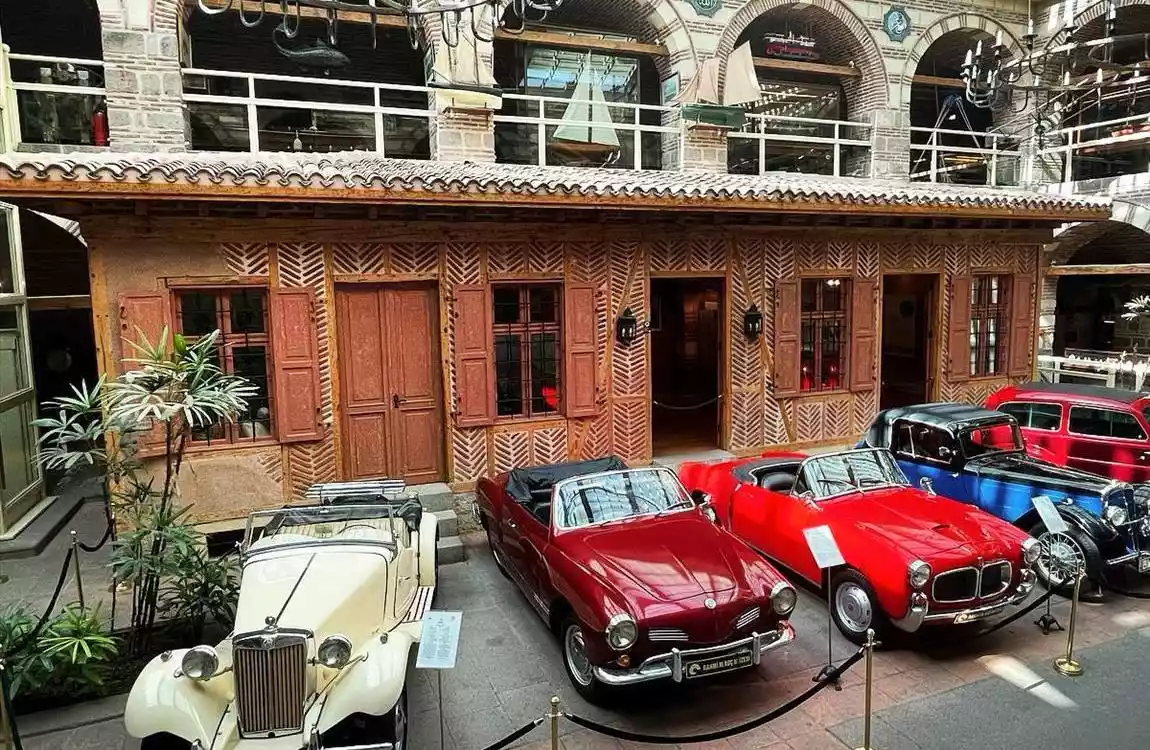
On the approximately 2,100-square-meter rectangular plot stand the historic Lengerhane building, a small building with a wooden roof, and stone walls. In the museum design, carried out without disturbing the essence of the inner courtyard and the outdoor space created by these structures, the aim was to convey to visitors the texture of the buildings together with the objects to be exhibited. In 2016, during a ceremony attended by family members, the building was named after Mustafa V. Koç.
TOUR PROGRAM
10.00 Departure from School
11.00 Arrival at Rahmi Koç Museum
14.00 Departure from Rahmi Koç Museum to School
15.00 Arrival at School